
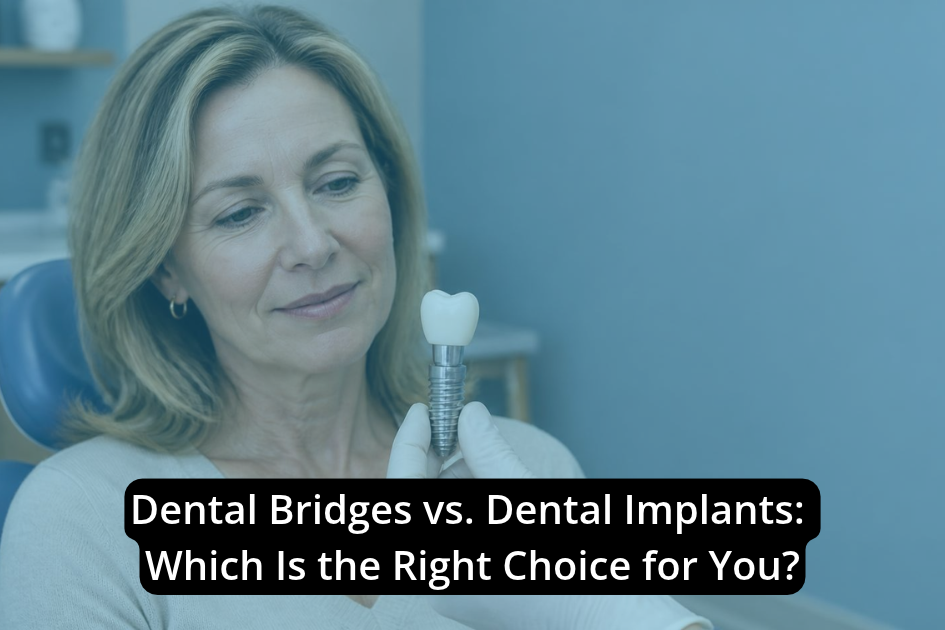
Losing a tooth is more than just a cosmetic concern. It affects the way you chew, the way you speak, and over time, the structure of your jaw and the alignment of your surrounding teeth. The good news is that modern dentistry offers excellent solutions for replacing missing teeth, and two of the most popular are dental bridges and dental implants. Both can restore your smile and your confidence, but they work very differently and are not the right fit for every patient. Here is a straightforward breakdown of what each option involves, how they compare, and how to figure out which one makes the most sense for you.
Why Replacing a Missing Tooth Matters More Than You Think
What Happens to Your Mouth When a Tooth Goes Missing
Many people underestimate how much a single missing tooth can affect the rest of their mouth. When a tooth is lost, the surrounding teeth begin to drift toward the space over time, which can throw off your bite and lead to uneven wear, jaw discomfort, and a higher risk of decay in areas that become harder to clean. Beyond the shifting, the jawbone beneath the missing tooth begins to deteriorate because it no longer receives the stimulation it needs from a tooth root. Left unaddressed, this bone loss can change the shape of your face and create complications for any future dental work. Replacing a missing tooth promptly is one of the best things you can do for your long-term oral health, not just your appearance.
What Is a Dental Bridge?
How a Dental Bridge Works
A dental bridge quite literally bridges the gap left by a missing tooth. It consists of a false tooth, called a pontic, held in place by dental crowns that are anchored onto the healthy teeth on either side of the gap. During your first appointment, the supporting teeth are prepared, and impressions are taken so a custom bridge can be fabricated. A temporary bridge protects the area while your permanent one is being made. On your second visit, the permanent bridge is fitted and cemented into place, restoring your bite and filling in the gap with a natural-looking result.
Who Is a Good Candidate for a Dental Bridge
A dental bridge is a strong option for patients who are missing one or more teeth and have healthy, stable teeth on either side of the gap to serve as anchors. It is also a faster solution than an implant since it does not require surgery or a healing period. However, it is worth knowing that the preparation process does require reshaping the adjacent teeth to fit the crowns, which is a permanent change to those teeth. Patients with gum disease or significant decay will need to address those issues before a bridge can be placed.
What Is a Dental Implant?
How a Dental Implant Works
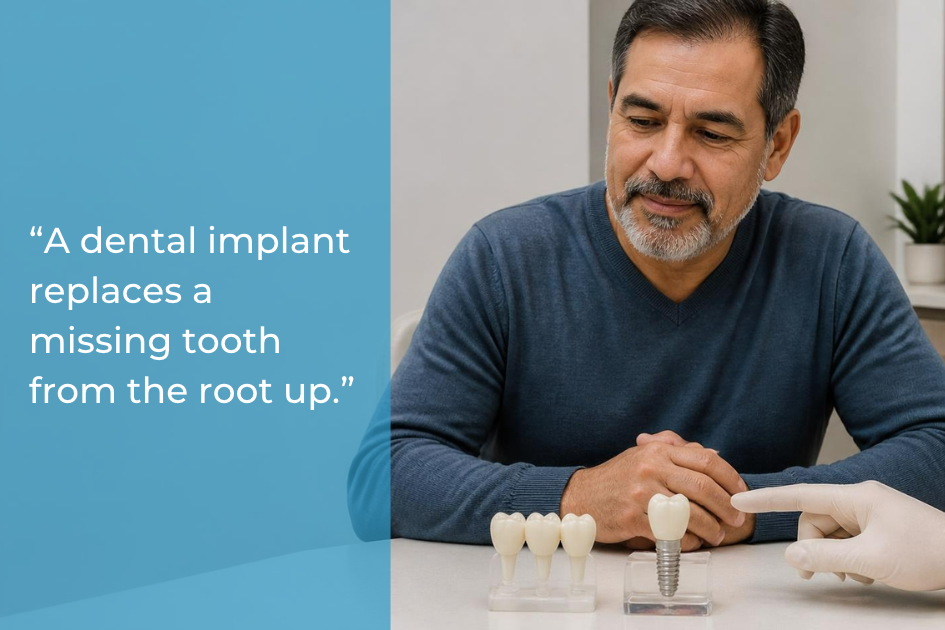
A dental implant replaces a missing tooth from the root up. A small titanium post is surgically placed into the jawbone, where it gradually fuses with the surrounding bone through a process called osseointegration. This fusion is what gives an implant its exceptional stability and makes it function so similarly to a natural tooth root. Once the implant has fully integrated, a custom crown is attached on top, completing the restoration. The entire process takes several months from start to finish, but the result is a permanent, standalone tooth replacement that looks and feels completely natural.
Who Is a Good Candidate for a Dental Implant
Ideal candidates for dental implants are patients who have sufficient jawbone density to support the titanium post, healthy gums, and good overall oral health. If bone loss has already occurred, a bone grafting procedure may be needed before the implant can be placed. Implants are suitable for patients of various ages, though they are typically not recommended until the jaw has fully developed. A thorough consultation with Dr. Jenna Jesko will determine whether implants are a viable option based on your specific dental health and medical history.
Dental Bridge vs. Dental Implant: How Do They Compare?
Longevity and Durability
This is where implants hold a clear advantage. A well-maintained dental bridge typically lasts between 10 and 15 years before it may need to be replaced, depending on wear and oral hygiene habits. Dental implants, on the other hand, are designed to last a lifetime with proper care. Because they are anchored directly into the jawbone rather than relying on neighboring teeth for support, they are extremely stable and do not carry the same long-term wear risks as a bridge.
Impact on Surrounding Teeth and Jawbone
A dental bridge relies on the adjacent teeth for support, which means those teeth must be permanently altered to accommodate the crowns. Over time, this can place added stress on those anchor teeth. A bridge also does nothing to address the bone loss that occurs beneath the gap, since there is no root to stimulate the jawbone. A dental implant, by contrast, actually helps preserve the jawbone by replacing the root. It does not affect surrounding teeth at all and actively supports the long-term health of the jaw structure.
Care and Maintenance
Both options require consistent daily oral hygiene, but the routines are slightly different. A dental bridge requires careful flossing beneath the pontic, usually with a floss threader or water flosser, to keep the area under the bridge clean and free from bacterial buildup. Regular checkups are important to monitor the fit and condition of the bridge over time. Dental implants are cared for much like natural teeth. You brush them, floss them, and visit your dentist regularly. No special tools are required, which many patients find much more convenient for the long term.
How to Know Which Option Is Right for You
Questions to Ask at Your Consultation
The right choice depends on your individual situation, and that is exactly what a consultation with Dr. Jenna Jesko is designed to help you figure out. Some helpful questions to bring to your appointment include: Am I a good candidate for an implant based on my bone density and gum health? How many teeth am I replacing and what does that mean for my options? What is the realistic timeline for each treatment? Will my insurance cover either option? What are the long-term maintenance differences I should be prepared for? There is no single right answer for everyone, and the best decision is always the one made with a full understanding of your oral health and your personal goals.
Get Expert Guidance at Cedar Park Premier Dentistry
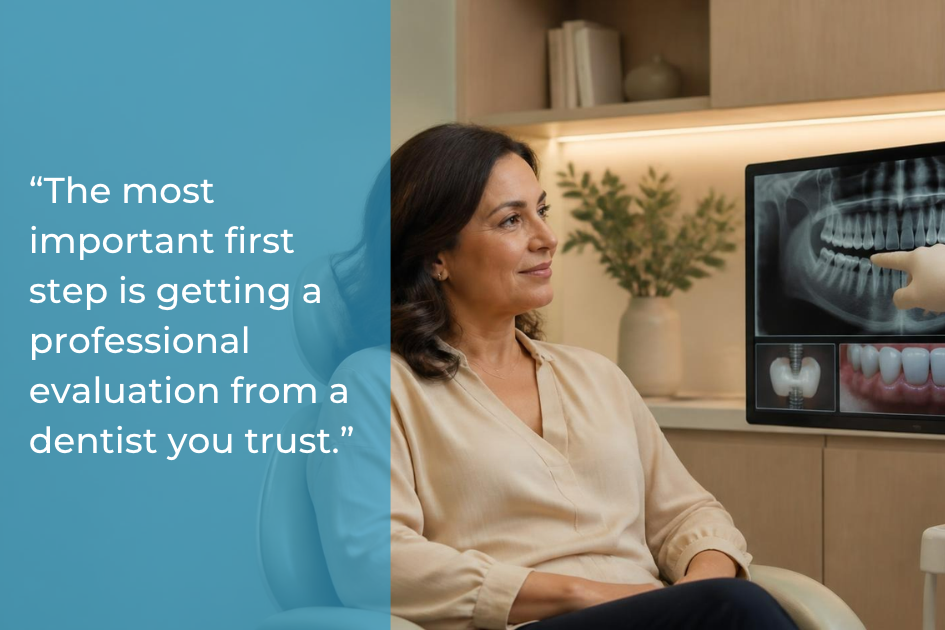
Whether you are leaning toward a dental bridge or a dental implant, the most important first step is getting a professional evaluation from a dentist you trust. At Cedar Park Premier Dentistry, Dr. Jenna Jesko and her team take the time to thoroughly assess your dental health, explain your options clearly, and help you choose the solution that fits your smile, your lifestyle, and your long-term goals. If you are in the Cedar Park or Austin, TX area and dealing with a missing tooth, do not put it off. Schedule your consultation today and take the first step toward a complete, healthy smile.